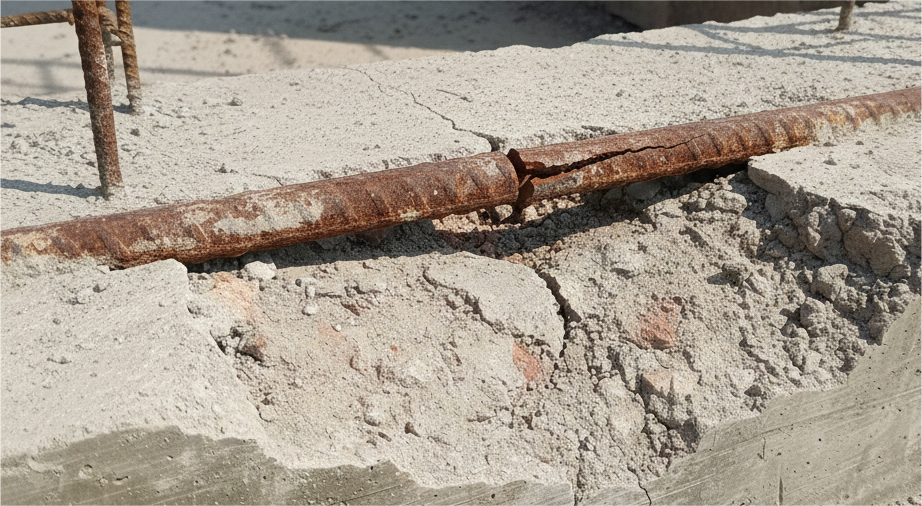
Why Crack Control Is Critical in High-Rise Buildings

Introduction
As Indian cities continue to grow vertically, high-rise buildings have become the backbone of urban development. Cities like Bengaluru, Hyderabad, Chennai, and Mumbai are witnessing rapid construction of residential towers, commercial complexes, and mixed-use developments. While architectural design and load calculations receive significant attention, one critical aspect often underestimated is crack control in reinforced concrete structures.
Unchecked cracks are not just cosmetic issues. In high-rise buildings, poor crack control can compromise structural durability, serviceability, and long-term safety. This is where the role of high-quality reinforcement steel such as VRKP Nexa TMT becomes crucial.
Understanding Cracks in High-Rise Buildings
Cracks in concrete structures are common, but their size, pattern, and progression determine whether they are harmless or dangerous.
Common causes of cracks include:
- Shrinkage of concrete
- Thermal expansion and contraction
- Creep under sustained loads
- Differential settlement
- Seismic and wind forces
- Poor reinforcement detailing
In high-rise buildings, these effects are magnified due to greater height, higher loads, and continuous stress cycles.
Why Crack Control Matters More in High-Rise Structures
1. Structural Durability and Longevity
Cracks allow moisture, chlorides, and pollutants to enter concrete, leading to corrosion of reinforcement steel. In tall buildings, this corrosion can spread across multiple floors, reducing structural life.
Using VRKP Nexa TMT bars, which offer strong concrete bonding and controlled ductility, helps limit crack widths and delays corrosion initiation.
2. Serviceability and Occupant Comfort
Even if a building is structurally safe, excessive cracking can lead to:
- Leakage and dampness
- Reduced thermal and acoustic performance
- Visible cracks that affect occupant confidence
High-rise buildings must perform well not only structurally but also in day-to-day usability. Proper crack control ensures better serviceability throughout the building’s lifespan.
3. Load Redistribution and Stress Control
In tall structures, loads continuously redistribute due to:
- Wind sway
- Live load variation
- Temperature changes
If cracks are not controlled, stress concentrates in certain members, increasing the risk of progressive damage. High-ductility TMT bars, like VRKP NEXA FE 550 and FE 550D, help redistribute stresses evenly, reducing crack propagation.
3. Load Redistribution and Stress Control
In tall structures, loads continuously redistribute due to:
- Wind sway
- Live load variation
- Temperature changes
If cracks are not controlled, stress concentrates in certain members, increasing the risk of progressive damage. High-ductility TMT bars, like VRKP NEXA FE 550 and FE 550D, help redistribute stresses evenly, reducing crack propagation.
4. Seismic Performance and Safety
During earthquakes, cracks form due to cyclic loading. The goal is not to eliminate cracks entirely but to control their width and behavior.
Poor crack control can lead to:
- Brittle failure
- Loss of stiffness
- Sudden structural degradation
VRKP NEXA TMT, with enhanced elongation and ductility, allows controlled cracking while preventing sudden failure, a key requirement in earthquake-resistant high-rise buildings.
Common Mistakes That Worsen Cracking in High-Rise Buildings
- Using low-ductility or sub-standard TMT bars
- Inadequate reinforcement detailing
- Improper curing of concrete
- Cutting or welding reinforcement on site
- Ignoring code-recommended crack width limits
Even the best design can fail if material quality is compromised.
Best Practices for Effective Crack Control
- Use high-ductility TMT bars like VRKP Nexa FE 550 / FE 550D
- Follow IS 456 and IS 13920 crack control provisions
- Ensure proper bar spacing and anchorage
- Maintain good concrete quality and curing
- Avoid over-reinforcement or under-reinforcement
Why VRKP Nexa TMT Is Ideal for High-Rise Crack Control
VRKP Nexa TMT bars are designed to meet the demands of modern high-rise construction by offering:
- High tensile strength with controlled ductility
- Superior concrete bonding
- Better stress redistribution
- Improved seismic and fatigue performance
- Consistent quality through advanced manufacturing
This combination helps control cracks, enhance durability, and improve overall structural reliability.
Conclusion
Crack control is not a secondary concern in high-rise buildings — it is a critical aspect of structural safety and performance. Proper crack management protects reinforcement steel, improves serviceability, and ensures long-term durability.
By choosing VRKP Nexa TMT, especially FE 550 and FE 550D grades, builders and engineers can significantly improve crack control in high-rise buildings, creating structures that are not only tall and modern, but also safe, durable, and resilient.